2014

Film

George Eastman House Light & Motion Gala, May 5, 2014, at Three Sixty° in Tribeca

My direct experience with the George Eastman House International Museum of Photography and Film, to give it its full name, began with their latest major restoration project, the recently rediscovered footage Orson Welles shot for the cinematic interludes in his Mercury production of Too Much Johnson. Apart from being a tour de force of conservation, the project underscored one inspiring aspect of the institution. George Eastman House is a museum, but, unlike virtually all art museums, which pride themselves on avoiding acquisitions in compromised condition, it actively seeks out films in need of conservation—that being its primary function, both to fill in the documentation of the history of photography and cinema, and to make lost works of art available to the public. This activity justifies itself of course, but its importance is heightened by the fact that motion pictures in particular were not considered worthy of preservation.
Art

“Alibis: Sigmar Polke 1963–2010,” April 19–August 3, 2014 at the Museum of Modern Art, with an aside on Gerhard Richter

Bluntly put: this event should not be missed. The first comprehensive overview of the multifaceted German artist Sigmar Polke (1941–2010), the exhibition dominates MoMA’s 2nd floor atrium and 10 subsequent rooms. Consisting of more than 250 works, it is one of the largest ever mounted at the museum. A rich catalogue accompanies the exhibition: Alibis: Sigmar Polke, 1963-2010, edited by Kathy Halbreich with Mark Godfrey, Lanka Tattersall, and Magnus Schaefer. To facilitate engagement, visitors are provided with a 32-page guide, containing all pertinent label information, leaving the walls purified for visual reception. Text, so much a part of Polke’s art, then is left aesthetically integral. The exhibition will travel to the Tate Modern in London from October 1, 2014 through February 8, 2015, and then to Cologne’s Museum Ludwig March 15 to July 5, 2015.  
Dance

Steps Beyond Performance Lab Series for Emerging Choreographers, Steps Studio Theater, May 17, 2014

Steps Beyond Performance Lab Series for Emerging Choreographers. At first, the evening felt a little like an exam, as there was a sheaf of paper and a pencil on each seat, and the audience was told to mark each performance with an eye to musicality, originality, costumes and other information. Afterwards, each sheet would be given to the choreographer, presumably as a guide to fine-tuning his or her work.  
Berkshire Review

Pianissimo: Memorable keyboard art by Russell Sherman and Marc-André Hamelin and chamber music by the Takács and Borromeo String Quartets trigger some personal reminiscences

This season marked the 75th Anniversary of the Celebrity Series of Boston, founded by Aaron Richmond, whose widow, Nancy Richmond Winsten, sponsors the piano events and is still a familiar attendee. I have a deep sense of nostalgia about the Celebrity Series. The very first concert I ever attended in Boston was with the Budapest String Quartet (my favorite quartet) in 1962. It was my first year of graduate school (I was a very young grad student) and I was living on a $1500 a year scholarship. I had neither time nor money for anything as frivolous as a chamber music concert. But I had to go. The Jordan Hall box office told me the performance was sold out... unless I was willing to take a cheap stage seat. So there I was, sitting a few feet away from the Budapest Quartet playing Haydn, Mozart, and Schubert. It remains one of the greatest concerts I ever heard in my life.
Music

The Great Composers? Part IV: Scherzo

Since one of my aims is to try to find out why, for some people, “classical” music is so much more potent than other kinds of music, and as a connected question, why these people form only a small proportion of the population, I’ll give some examples of the pitfalls that await the unwary “classical” missionary who speaks to high school students or innocent adults. Most of what follows is drawn from real life. The speaker, Juan Torescramiento, is introducing a performance of one of Beethoven’s Rasumovsky Quartets by the Pro Classico String Quartet. Mr. Torescramiento is not Spanish, but the fake-Spanish name I have given him is more appropriate to the character of his discourse than anything printable in English. He is actually a conflation of several musical missionaries (all of white European extraction) whose effusions I was unlucky enough to have to sit through during the thirty-two years of my tenure as a high school teacher in New York City. Some were faculty members. After giving a few details of Beethoven’s birth and early life he gets to the real stuff. First we get some of the old horse-feathers… Oops! I meant to say “conventional wisdom.”
Berkshire Review

B-List Works Shine Forth at Symphony Hall. Andrew Davis leads the BSO in Vaughan-Williams, Prokofiev (with Yuja Wang), and Rimsky-Korsakoff

The oeuvre of the each of the greatest, most familiar composers can be imagined as a personal cosmos, a collection of works of great power and quality, spanning a wide range of style and expression. Mention of their names is almost enough to arouse expectations of music belonging on the A-List. Other significant but less ubiquitous composers can be known to concert audiences through small numbers of repeatedly performed works that possess an identifiable sound, style, and mood. Less familiar but important works by two such composers, Ralph Vaughan-Williams and Serge Prokofiev, received fine performances by the Boston Symphony in late March, along with an A-List favorite by Rimsky-Korsakoff. These works gave audiences a chance to savor some less familiar, even surprising sides of their composers’ artistic personalities, and to provoke curiosity about what other works by these composers might be lurking in the shadows of the B-List.
Music

James Conlon leads the San Francisco Symphony in a little “Entartete Musik”

If nothing else had been performed this week at the San Francisco Symphony, the Scherzo from Erwin Schulhoff's Fifth Symphony would have been worth the ticket. James Conlon has become an authority in recent years on the subject of "Entartete Musik,” which is to say, music forbidden performance by the Nazis. And he had the daring to program just what he thought the audience would enjoy. I made a point after the concert of listening to several complete symphonies by Schulhoff and concluded Conlon was right to include just the Scherzo from the Fifth Symphony in his program, at least this time around. The music was both remarkably exciting (about which more in a moment), not too long and utterly hilarious, due to the brilliant and edgy talk Conlon gave from the podium before performing it.
Dance

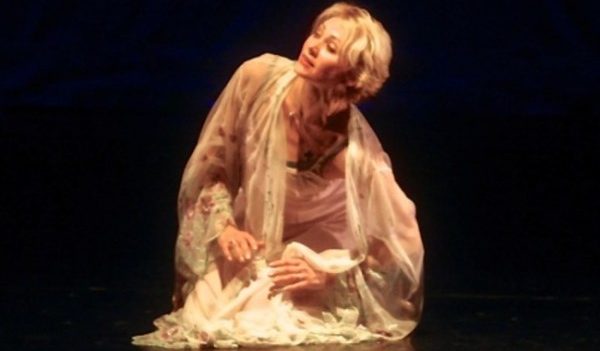
Valentina Kozlova Dance Conservatory of New York 10th Anniversary Celebration

Valentina Kozlova was born in Moscow and trained at the Bolshoi Ballet School where she danced all the major classical roles. In 1979, on tour in the U.S with the Bolshoi, she defected and began her career anew, performing leading roles at the New York City Ballet; appearing at Spoleto, La Scala, Teatro Colon in Buenos Aires and also on video. In 2003, she opened her ballet school, a pre-professional training program that has been a launching pad for many students.
WP2Social Auto Publish Powered By : XYZScripts.com